
TODAY’S WORLD: “Start-Right” in Child Training
Following through Proverbs 22:6…..
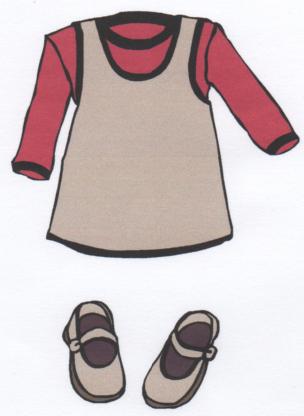
Were your first shoes, by any chance, a pair of Start-rite? The long-established company which is based in Norwich and traces its origin back to 1792 has always recognized the importance of “starting right” when it comes to walking. Good footwear is vital if children’s feet are to develop properly and remain healthy.
There is a spiritual parallel to this, for we discover in Scripture how important it is for a young life to “start right” in learning how to “walk” through this world. The words of Proverbs 22:6 are probably very familiar to most Christian parents:
“Train up a child in the way he should go: and when he is old, he will not depart from it.”
The writer is considering two different periods of time. First there is childhood – although no specific reference is made to the age of the “child”; and then there is the time when that same child has become “old”. The years have passed. Either the child has become a young adult, or a much later stage in life is being contemplated when he or she has literally become old. Whichever way we understand the verse, the principle is clear: a child’s early years have a profound bearing upon his later life. It is vital therefore for parents to “train” each child of theirs in the way that he or she should go.
BOOKS MAY HELP
Solomon was the wisest of all men in his day (1). As well as writing the Book of Proverbs with its many references to child-training, he also wrote Ecclesiastes. Years of painstaking research brought Solomon to this conclusion: “Of making many books there is no end; and much study is a weariness of the flesh” (2). How right he was! Take a look inside any public library and see the thousands of books on the shelves – not to mention the thousands more that have already been withdrawn from use. Even on the subject of raising children it is possible to be overwhelmed by the number of books that Christian authors have written. Where should we begin?
One book containing sound, practical advice is The Shaping of a Christian Family by Elisabeth Elliot. (3) This former missionary in Ecuador recalls how her parents raised their six children for God. Her own experiences as a mother as well as personal observations over the years have been drawn on to produce an interesting and useful volume. It is not a text book but is rather the story “of one man’s family” and is intended to be “a description, not a prescription” (4). Many helpful tips can be gleaned from its pages.
In selecting books on child-training it is vital to ensure that the author has written from a truly Christian perspective. Modern educational theory is often at variance with biblical instruction and must therefore be rejected. The best books come from authors who “fear the Lord” (see Proverbs 9:10) and who seek to apply in relevant ways the unchanging principles of God’s unfailing Word.
A TIME FOR THANKSGIVING
The birth of a child can be a joyful occasion (5). Correctly it is a time for giving thanks to God rather than for congratulating the parents. Christians recognize that God is the Giver of life (6). When a child is born, the praise is rightly His! Our humanistic society today has obscured this fact, and the word congratulations frequently found in greetings cards that celebrate the arrival of a newborn baby is actually out of place.
Tenderly holding that precious little life in their hands for the first time, the parents cannot take their eyes from their tiny new bundle of joy. The thrill of that moment is unique. For a few seconds, perhaps, thoughts of the future cross their minds. What happy hours can be anticipated as their child passes from one interesting stage of development to another! Maybe another thought crosses their minds too. They now have a new responsibility. There is a child that must be trained under God “in the way he should go”. It is in their power to influence that child for good or for ill. What a sobering thought!
BASIC NEEDS
A newborn baby comes into the world bringing absolutely nothing with it (7). It is utterly helpless. From the moment of its birth it has basic human needs – two important ones being love and security. Many things in the world can cause fear, but “there is no fear in love” because “perfect love casteth out fear” (1 John 4:18). Secure in its mother’s love, the baby need not have any fears. There is one who is stronger and wiser who is caring for its every need. My wife and I were very grateful to the midwife who taught us how to wrap our first baby tightly in a shawl. Like this, our little daughter was made to feel secure. It was also an excellent practical way of teaching her that it was time to sleep. Tiny arms pinned closely to the body inside a shawl could not be used to fight off the covers – something that babies love to do!
Another basic need, of course, is food. Some midwives encourage regular feeding times, whereas others maintain that babies should be fed “on demand”. Which is the best policy? At first this might seem a matter of little importance. However, there is a vital principle at stake. The baby that receives milk “on demand” is learning from its earliest days that it is actually in charge! On the other hand, the baby that is given milk at a time determined by its mother learns one of the most important lessons of childhood in its first few days of life. It learns that someone else is in charge and knows best. Further, the baby is made aware that there are other people in the world, and it comes to learn the importance of regular meal-times and family routines. In addition to this, feeding at pre-determined times and not according to the baby’s “demands” makes life so much easier for the parents! It is important to realize that the modern philosophy of self-expression – which runs counter to the teaching of Scripture – is actually being encouraged at the earliest opportunity when a baby is fed on demand.
WHEN BABIES CRY!
It does not take long to discover that babies can cry! Often during those first few weeks after birth parents wonder what to do with their crying child. “Why is he crying? What is the matter? What can we do?” Here common sense must prevail. Babies can actually cry when there is nothing to cry about! If a little one discovers that whenever it cries a parent will come running to its side, it will soon use crying as a technique simply to get attention! If it comes to discover that “turned on” cries of this kind achieve nothing, it will soon give up the trick. Once again, from earliest days it is important to teach the baby who is in charge. If the baby is fed and comfortable and nothing apparent is the matter, be prepared to let it cry. While it is vital to show the baby that it is loved, it is unnecessary to pick the baby up every time it cries. Parents that never leave a crying child are actually making a rod for their own backs.
Those early days are tremendously important. Some will argue that it is too early to begin training at birth and parents should wait until later. To such an objection we ask, “How much later?” How do we determine when to start? That precious little baby in your arms has been born with a sinful nature that it inherited from you! (8) It does not know the difference between right and wrong. Your duty as a parent is to train your child – and it is never too early to start this training. Neither is it ever too early to start praying for your children.
LEARNING OBEDIENCE
A father of ten children (all of whom became fine Christians) stated that if you do not get obedience by the time a child is eighteen months old, you have probably left it too late. Many parents have struggled with disobedient children simply because they did not begin this vital training soon enough. Procrastination is always dangerous, and you can never begin child-training too early. While training is the responsibility of parents, a child’s duty is to obey. The Bible tells us that the Lord Jesus as a child was obedient to His parents (9).
Long before the age of eighteen months a child needs to understand clearly two words. One of these is “No”. Certain objects in the home are precious; others are dangerous. Little hands that grasp and tiny fingers that poke can cause damage or be damaged. Parents need to be aware of this. As soon as the little hand reaches for that forbidden item, it is time to say, “No”. There must be firmness in the voice so that the small child realizes that an order has been given – not an option.
In all probability the child will test the parent’s resolve to see whether the prohibition was concrete. Should this happen, the next “No!” must be expressed more firmly to teach the child that this is not a matter for debate. No doubt some parents will think this approach too hard. “She’s only a baby. One mustn’t be unkind,” they may say. It is not a case of being unkind, however. The child that is allowed to pick up everything and do anything in the home will not understand why it should behave differently in someone else’s house. Other folk may not be so tolerant when their cherished ornaments are moved around by an inquisitive one year old! Teaching the meaning of “No” from an early age is the first step in learning to respect other people and their property.
The other word that must be understood is “Come”. The child needs to understand that “come” means “come now” and not when he feels like it! An older Christian gave this good advice: “You can train your child to obey you whenever you want – the first time you speak, when you raise your voice, when it pleases him, or never. But remember, in God’s Word we learn that obedience means now.” (10) If the child learns in infancy that there is really no need to come when called, how will he be able to respond when there is a danger that he cannot see? Long before a child can form the words “no” and “come” with his own lips he needs to understand what both words mean – and obey them.
CROSSING THE LINE
Conflict is something we want to avoid, but picture this scene. Father has said “No!” quite firmly, but the little fellow is intent on achieving his goal. Once more he reaches for the forbidden object. What is going to happen? Father is faced with a choice: he can give the child another opportunity (and how many more?) to obey, or he can administer punishment. What should he do?
Corporal punishment is unfashionable today, and strenuous efforts are being made in many countries to make it illegal. It is often branded as vindictive, antiquated, and harmful. Elisabeth Elliot, in her book mentioned earlier, helpfully defines corporal punishment in this way:-
“It is a deliberate measure of pain, delivered calmly, lovingly, and with self-control, on a loved child in order to deliver him from self-will and ultimate self-destruction.” (11)
Not surprisingly, of course, modern educational and sociological thought is often at odds with the revealed will of God. Hebrews 12:7-8 teaches that chastening is a necessary ingredient in child training. The parent who refuses to administer punishment is not being more loving by his restraint. According to Scripture chastening is a proof that the parent loves the child, and a lack of discipline actually reveals the opposite of love (12). Although it is anything but “joyous” (certainly for the child – but also for the parent!) it is intended to produce results that will afterwards far outweigh the initial pain. (13).
There are numerous references to corporal punishment in the book of Proverbs. Contrary to the common psychological teaching of today, Scripture points out that corporal punishment does not harm a child. “Withhold not correction from the child: for if thou beatest him with the rod, he shall not die. Thou shalt beat him with the rod, and shalt deliver his soul from hell” (Prov.23:13-14). The words “rod” and “chastening” indicate that a real smack is anticipated and not a little “tap” that the child does not even feel! The parent who appreciates the need for his child to be delivered from future ills will not “spare the rod” and thus “spoil the child”. Such early discipline will most certainly reap dividends. In years to come it will be very apparent that “the child whose will is trained to subjection is a freer, happier child, much pleasanter company than he whose own will is his only law…” (14).
Returning to the conflict situation, what should the father do when the little child disobeys his command? If he does not act at once, the child will soon come to expect delays and will see no need for instant obedience. Did he get the child’s full attention and then articulate his command clearly? If he did, and if his instruction was understood but not complied with, it is time for action. In this way the child will very soon learn the value of prompt obedience.
BEDTIME!
“I can’t get my child to go to bed. She always wants to watch another programme – and when I put her in bed she climbs out as soon as I’ve gone downstairs and starts playing in her bedroom.” What is the problem? To some there is no problem: the child is not ready for bed. When she is properly tired, they tell us, she will see the need to lie down and go to sleep. In the meanwhile – what?
Perhaps the child is not tired enough – but that is not the real problem. Ineffective authority is the real issue: the child is overriding the parent’s will. Which of them, according to the Bible, is meant to be in charge?
As soon as possible after birth a sleeping pattern needs to be established. The newborn baby that has had milk, been wrapped securely in a shawl, and placed somewhere quiet, will soon learn that it is time to sleep. The fact that an adult decides upon the bedtime gives the child security in knowing that someone stronger and wiser is caring for her every need. As the child gets older and is moved from a cot into a proper bed, there is no need for the pattern to change. Clear instructions should be given so that she knows she is to stay in bed. The child must understand that, as in all other areas, disobedience will result in punishment. Once the obedient toddler is tucked up in bed, the parents will soon appreciate “the peaceable fruit of righteousness” (15), for they will enjoy the wonderful tranquility of not being disturbed by the “thunder” of tiny feet rampaging around the bedroom above their heads!
“UNITED WE STAND”
Discipline is a word that may sound harsh or unpleasant, but it is vital in the life of a child. Parents must always have in view the long-term goal. Early discipline will lead, ultimately, to self-discipline. Through discipline, the child will learn wisdom. An undisciplined child is certainly no credit to his parents, as Proverbs 29:15 teaches:
“The rod and reproof give wisdom: but a child left to himself bringeth his mother to shame.”
In all matters of discipline one of the most important things to realize is that both parents must stand united. It is vital not just to be consistent and fair but to be seen to be so. Children are quick to discover inconsistencies and will soon make the most of a situation where one parent allows what the other has refused. It goes without saying that favouritism is wrong. The sad story of Esau and Jacob in Genesis 27 all came about because “Isaac loved Esau” while “Rebekah loved Jacob” (16) – and it remains a permanent warning to us all.
Sometimes a younger child may be treated more leniently than the older ones were – and children notice such things. Fairness is tremendously important in a young child’s thinking. Parents need to ensure that one child is not getting more attention than another. Unity between parents must also be displayed. If mother has disciplined an erring toddler, father must not console the crying child. Such actions will give the impression that the parents are working against one another, or that the father loves the child more than the mother does.
Punishments should only be administered because they are necessary. No demands must therefore be made that are too great for the child to carry out. This requires parental wisdom. Disobedience can sometimes be connected with a smile. The toddler is called and refuses to come. Instead he just sits on the stairs and grins. Father calls again, and still he sits and smiles. He may look cute, and it is tempting to respond with humour – hauling him back in such a way that the whole performance becomes a joke. Sometimes it is difficult to keep a straight face when a small child disobeys in a humorous way; but if there is any trace of disobedience it is the parents’ responsibility to deal with it at once. However, do not needlessly shame the child by making the punishment a public spectacle.
INFLUENCE
In her book about parenting referred to earlier, Elisabeth Elliot wrote:
“The example of parents, for good or ill, is an influence far more profound than can be measured.” (17)
How true this is! The Lord Jesus said, “A disciple is not above his teacher, but every one who is perfectly trained will be like his teacher.” (18) Little children soon begin to copy their parents’ ways. What sort of model are they seeing? Just as Paul encouraged believers to imitate him in the sense that he imitated Christ (19), so parents should seek to be role models in holiness. God tells us: “Be ye holy; for I am holy.” (20) In an increasingly godless and unholy world it is vital that children in Christian homes should identify holiness in the lives of their parents.
The media in general and T.V. in particular are very effective in bringing anti-Christian and ungodly influences into the home, teaching youngsters to be independent and to reject authority. It is not reasonable to expect young children to have the ability to distinguish between what is good and what is not, or to imagine that what they see on T.V. will not have any influence upon their lives.
A Christian decided to place a card displaying the words of Philippians 4:8 on top of his T.V. monitor. Every time he switched the set on he was challenged by the text. If the programme that he was watching did not measure up to the standards of the text, it was his duty to turn it off. It did not take him long to discover that there was very little point in having a T.V. at all! While many would not be prepared to go as far as this, children do need to be protected from unhelpful influences. You cannot protect them 24 hours a day, but why make matters worse by allowing programmes which are positively harmful to be beamed into your home?
INFLUENCE – SPIRITUALLY
Spiritual influence must begin in the home. It is here that a child’s spiritual education should take place. While Sunday Schools are a good idea and have their place, they must never be regarded as a substitute for the work of Christian parents. Bible reading and prayer should be seen as normal activities in the home – indeed, as essential ones. Before the child reaches the age of one it is good to hold the tiny tot in your arms or on your knee at bedtime in order to sing a simple chorus and have a short prayer. Later, illustrated Bible story books can be used at bedtime too.
What about church? As soon as possible after the baby is born try to take it with you to Sunday morning services. Encourage quietness from the very beginning. If the baby grows up knowing that being quiet is the expected thing, he will soon learn to conform. In those early months you may find a beaker containing drink handy to have by you to use when a disturbance seems imminent, but there comes a time when it should be discontinued. Packets of sweets, piles of books, and endless toys will give the child the wrong idea of what going to church is all about. Let there be moderation in all things.
Once again discipline is what counts. If a two-year-old realizes that misbehaviour will not get him out of the service – it will only result in him being taken outside for discipline to be administered before he is brought back again – he will soon learn that behaving properly is actually worthwhile!
How should Sunday be spent? With increasing secularization in many countries, Christians are under pressure to compromise. Sunday, for many professing believers now, is very much like any other day. Early in life children need to see that Sunday is “the Lord’s Day” and not a “punishment day”. It has its pleasures, but it is different from all the other days of the week. Being with other believers to worship God should certainly be a priority.
INFLUENCE – SOCIALLY
Paul wrote:- “Look not every man on his own things, but every man also on the things of others,” (Phil.2:4). Considerateness and respect do not come naturally; we have to learn these virtues. At home, children can be encouraged to think of others by learning to pass food to them at the meal table. Learning not to shout is also important. If we, as parents, shout from one end of the house to the other, our children will soon learn to do the same! Good manners must be both observed and taught.
MUCH HARD WORK!
A lot of ground has been covered in this article, and yet much more could have been written. Our purpose has simply been to think of what is meant by training up a child in the way he should go – from the beginning. As children grow up, the challenges parents face will change too – in the kind of way that shoe styles change as the child’s feet develop. This, however, does not alter the fact that in their training it is imperative to “start right” in preparing them for life’s difficult pathway.
Does all that we have discussed seem impossible? It isn’t – although it may be hard! Parenting is never easy, but it can be rewarding. Parents themselves are always learning and sometimes feel the need to ask older and wiser people for help. How thankful we are that in our perplexities we have a Father in Heaven to whom we can turn for wisdom and grace in our daily responsibilities with our little ones.
END NOTES:- (1)1 Kings 4:31. (2)Eccl.12:12. (3)Elliot, Elisabeth, The Shaping of a Christian Family, Oliver-Nelson Books, Nashville, Tennessee, 1992. (4)E.Elliot, p.214. (5)Jn.16:21. (6)Ps.100:3. (7)1 Tim.6:7. (8)Ps.51:5. (9)Luke 2:51. (10)Choice Gleanings: Daily Calendar, 5th March 1996. (11)E.Elliot, p.134. (12)Prov.13:24. (13)Heb.12:6,11. (14)E.Elliot, p.135. (15)Heb.12:11. (16)Gen.25:28. (17)E.Elliot, p.53. (18)Lk.6:40, NKJV. (19)1 Cor.11:1. (20)1 Pet.1:16.