
search site
BIBLE BOOK: Colossians
“Nothing but Christ”…..
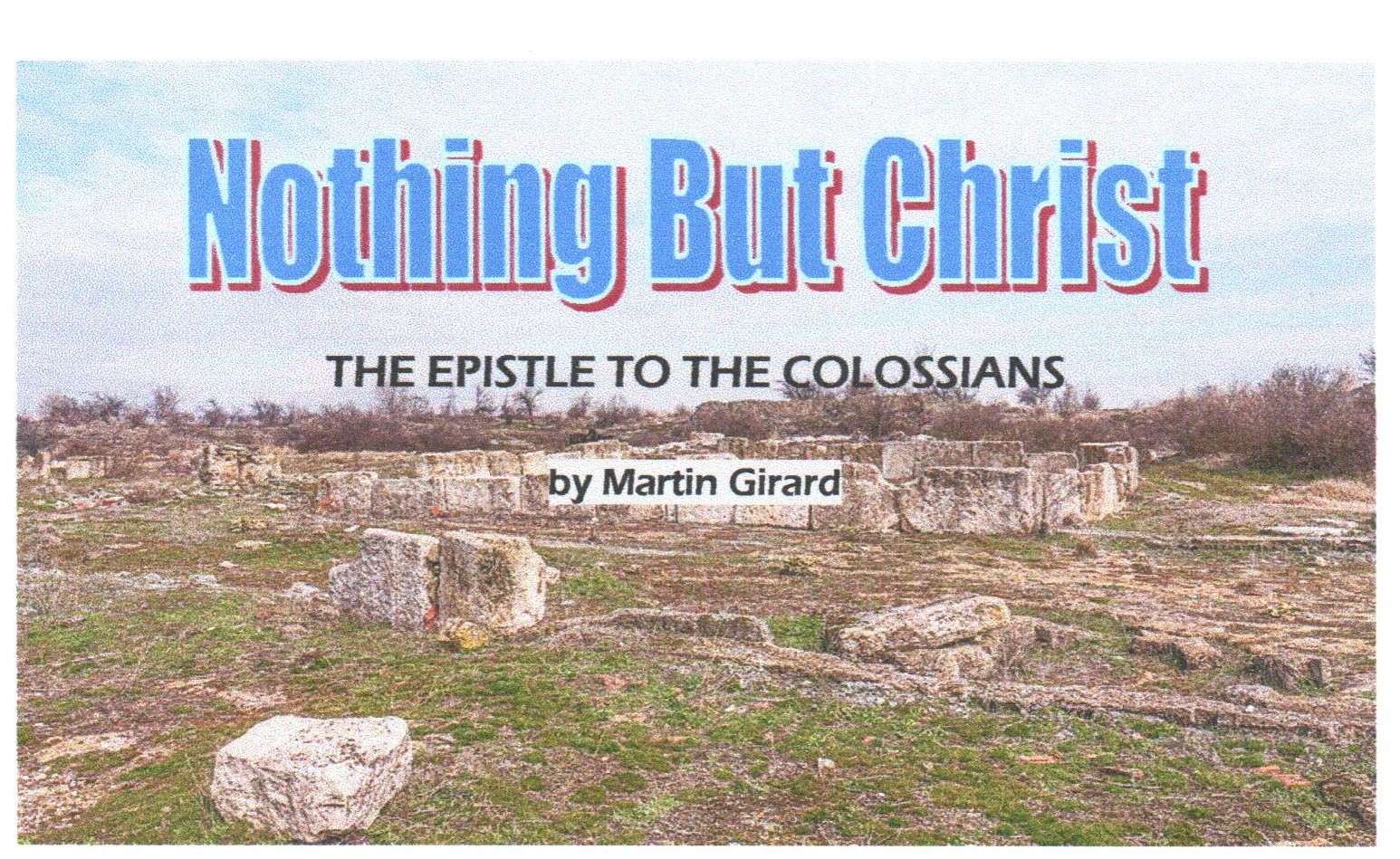
Colosse was located in the Roman province of Phrygia which is in present-day Turkey. Its name may have been derived from “colossus” on account of the dramatic limestone formations found in the area. The city developed near to the Lycus River which flows westwards. Not far away were Hierapolis (a centre for both health and religion) and Laodicea, although Colosse was smaller than both. A military route from the River Euphrates to the west passed through the area resulting in Colosse being a commercial centre.
When Paul wrote his epistle, Jews had been living in the area for two centuries and had adopted Gentile practices. It is estimated that by 50BC some 50,000 Jews were in the locality. Although Colosse had prospered, at the time of Paul’s epistle it was starting to decline.
TIMING AND TRAVELS
Paul had visited Ephesus on his third missionary journey, so Colosse may well have been evangelized at the same time. According to Acts 19:10 Paul had remained in the area for two years. From Colossians 1:7 it is quite likely that Epaphras was converted through Paul’s ministry and took the message of salvation to his own people. This would have been around AD53-56. Apart from Philemon (in whose home the church met) and his family, Paul evidently did not know the believers at Colosse who were mainly Gentiles. This impression is formed by comparing the references to those who were “alienated and enemies” (1:21,KJV) and who had never seen Paul’s face (2:1). The epistle to Philemon should be read in conjunction with Colossians, for it names Apphia and Archippus, the wife and son of Philemon (v.2). Archippus is mentioned in Colossians 4:17.
WHY THE EPISTLE?
Epaphras had informed Paul of some errors troubling the church at Colosse. One was Jewish ritualism, while another was an early form of Gnosticism. Paul wrote in order to combat this false teaching. Comparing Colossians 4:7-9 with Philemon 12, it would seem that Tychicus and Onesimus delivered the epistle. According to early tradition, Paul wrote the letter when he was a prisoner in Rome about AD61-63 – though it could have been written a few years earlier when he was imprisoned in Ephesus.
THEMES COVERED
In the first two chapters Paul refutes the teachings of Gnosticism that there are mediating beings and that mystical experiences can equip us with knowledge. Mistaken views relating to the person of Christ are also corrected. In the second chapter Paul confronts Judaism, pointing out that ceremonial observances have been done away in Christ. The third chapter answers the claims of Antinomianism – that those who are under grace need not practise self-control.
In dealing with the erroneous “wisdom” and “knowledge” being circulated, Paul directs the attention of his readers to Jesus Christ “in whom are hid all the treasures of wisdom and knowledge” (2:3). The concept of the Body of Christ is developed in which He is viewed as Head. The epistle moves from a doctrinal emphasis in the first two chapters to a practical one in the last two chapters. Having demonstrated what we are in Christ, we are shown our responsibilities in living up to these doctrinal truths. Although similar to Ephesians in some respects, the emphasis in these two epistles is different. In Ephesians the believer is pictured “in Christ”; in Colossians Christ is seen in the believer. Both epistles present the concept of the Church as the Body of Christ, but in Colossians the emphasis is placed on Christ being the Head.
COLOSSIANS – BRIEFLY
After his introductory greetings Paul turns to thanksgiving and prayer (1:1-23). He then warns of the perils which we face when our attention is not focused on Christ (1:24-2:23). The practical section of the epistle follows in which emphasis is placed on living the new life (3:1-4:6) before the concluding greetings and instructions (4:7-18).
Believers are complete in Christ (2:10). We need to be “rooted and built up in Him” (2:7), seeking “those things which are above” (3:1). As we await Christ’s promised return, Colossians would teach us to do all in the Name of the Lord Jesus (3:4,17).