
UNDERSTANDING: Finding the Real Church
Comparing the Biblical with the Popular Meaning…..
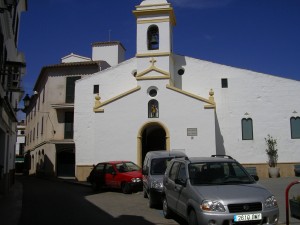
Talk to the proverbial “man in the street” about the Church and at once you will discover he has his own thoughts about it. In fact, people have many different ideas when the subject of the Church is raised. If you want to find the way to some place, you may well be given directions which highlight certain landmarks to look out for. Often these include either an inn or a church building!
Some church buildings are very noticeable, so it is not surprising that they are mentioned by a person who helpfully gives directions to someone who is lost. “Go past St. Peter’s Church on the left,” you may be told. “It is the church with the tall spire and the beautiful stained-glass windows.” Many old churches are admired for their architectural design, their aesthetic quality, or their sheer magnificence. But if we think of the Church in these terms alone, we are on the wrong track. The Bible has something quite different to say.
WHAT’S IN A WORD?
The word “church” in our Bibles is a translation of the Greek ekklesia. If the word was translated literally into English it would be “a calling out of” – which sounds rather clumsy! It refers, not to a building, but to a group of people. A body of Roman citizens who met to discuss the affairs of State was an ekklesia. (The word is used in this way in Acts 19:39 KJV, where it is translated “assembly”.) When the leaders of Israel met together the same word was also used to describe their “assembly”. So to use the word “church” when we are referring to a building is actually incorrect biblically – though the word in today’s society has come to refer to a building. We need to keep this distinction in mind. When we read “church” in the New Testament, we must remember that it is the people who are in view and not the building. Church buildings, as we know them, did not exist in those early days. In Bible times Christian believers usually met simply in a home.
THE FIRST TIME
The word “church” as used in the New Testament is first found in Matthew 16:18. Jesus had asked His disciples who people thought He was. Different ideas were in circulation at the time. When asked directly for their own thoughts on the matter, Peter replied without any hesitation, “Thou art the Christ, the Son of the living God” (Mt.16:16 KJV).
The Lord Jesus gave Peter credit for his answer but pointed out that Peter had only made the statement because the Father had revealed the truth to him. Jesus continued: “Thou art Peter, and upon this rock I will build My Church; and the gates of hell (“Hades” NKJV) shall not prevail against it” (Mt.16:18). The Lord was not suggesting that Peter was the rock and that the Church would be built on him. (It would be a poor Church if it was built on Peter who later denied his Lord!) Rather, the Church would be built upon the foundation of Peter’s statement. Christ Himself is the Rock, and the Church is built on Him. Notice at this point that the Church is spoke of as future. It did not yet exist. So it is Christ’s Church – and when Jesus spoke it was yet to be built.
Apart from some references to “church” in Matthew 18 (which clearly concern an assembly of people) the next time the “Church” is mentioned is in Acts. Not all ancient manuscripts contain the word translated “Church” in Acts 2:47 (“the Lord added to the Church”), but the word is found shortly afterwards where we read, “Great fear came upon all the Church” (Acts 5:11). What event comes between Matthew 16 and Acts 5 to account for that which was future having now come into existence? Pentecost! It was on the Day of Pentecost that the Church was formed, when all who believed were baptized by the Holy Spirit into the body of Christ (1 Cor.12:13).
A BUILDING NOT MADE WITH HANDS
In order to help us understand what the Church is, a number of different pictures are used in the New Testament. The Lord Jesus spoke of His Church as a building in Matthew 16:18. A building is made up of individual bricks or stones, and Peter takes up this figure when he refers to Christ as the Living Stone and to believers as living stones too that are being built into a spiritual house (1 Pet.2:5). In absolute harmony with this teaching, Paul describes the Church in the same way – a building growing into a “holy temple in the Lord”, individual believers being built together into a “habitation of God through the Spirit” (Eph.2:20-22). God does not dwell in a literal earthly building but in the hearts of all His children, by His Spirit.
Perhaps another distinction should be made at this point. All the references considered thus far relate to the Church universal which could be called the macrocosm. However, the New Testament also envisages the microcosm – that small-scale representation of the Church universal, meeting together at a certain time in any locality.
A BODY WITH MEMBERS
Another helpful picture used in the New Testament is that of the Church as a body. Christ is “the head” of the Church “which is His body, the fullness of Him that filleth all in all” (Eph.1:22-23). The human body is made up of many members, the body itself needing all of its respective parts. This is something Paul develops in detail in 1 Corinthians 12. Together, believers form “the body of Christ”, and individually we are “members in particular” (1 Cor.12:27). All the parts of the human body are necessary and are to work in harmony with one another under the direction of the head.
Spiritually, the application is simple. Christ is the Head of the Church, and the local expression of that universal Church must recognize this fact. Christ’s Word must be obeyed, and fellowship between the individual members of this “body” must be enjoyed. Obviously Christ has no human body on earth today as once He did, for He is now glorified in heaven. Believers corporately make up His spiritual Body on earth today and represent Him here below. Just as the human body is what we see of a person, so Christ’s Body (the Church) is the vessel that makes Him known in the world today. How important, therefore, that the members of the Church should glorify the Lord Jesus Christ.
A BRIDE TO BE
The third illustration takes us into the future. Not only is the Church Christ’s Body here on earth; it is also His Bride. This theme is developed in Ephesians 5 where Paul compares the relationship between Christ and the Church with a man and his wife. Christ “loved the Church, and gave Himself for it; that He might sanctify and cleanse it with the washing of water by the Word, that He might present it to Himself a glorious Church…” (Eph.5:25-27). The Church is Christ’s Bride and is precious to Him. That complete body of believers will one day be presented in glory, “without blemish”, and will be His companion for all eternity.
John was invited to catch a glimpse of “the Bride, the Lamb’s wife” (Rev.21:9). This “body” of blood-bought believers is seen in Revelation to be beautifully “adorned” (Rev.21:2) and “arrayed” (Rev.19:8) for eternity. Earlier we noted the difference between the universal Church and the local church. Another distinction needs to be made. The Church on earth is not the complete Church. Millions of its members have passed from this life and have gone to be with Christ – “which is far better” (Phil.1:23). Those believers found on earth today are just a fragment of the complete Church. Christ, however, is coming again to take His redeemed people to heaven. When the remaining members of the Church on earth are caught up to meet the Lord in the air and are reunited with those who have already entered His presence, we all shall be for ever with the Lord (1 Thess.4:17). The Church – from Pentecost until the moment of the Lord’s return – will then be complete, with all its members together. This is its glorious destiny.
COMPLETE IN GLORY
The “building” is not yet complete. A living stone is added to it every time an individual is born again. But one day the “building” will be complete, and then the Lord will come. Only He knows when that day will be. The “bride of Christ” is now very much in the position of Isaac’s bride, Rebekah, in Genesis 24, who was travelling to a new home to meet her beloved. Believers today are “strangers and pilgrims” (1 Pet.2:11) who are not really at home here on earth. We are looking for our heavenly home and waiting to see our Redeemer face to face.
Sometimes you may be asked, “Are you a church member?” All believers are members of the true Church, but we need to have fellowship in a local church where the truths of God’s Word are believed and proclaimed. Perhaps now we can see that thinking of the Church as simply a building on the street corner misses the point. The Bible teaches us there is so much more.